


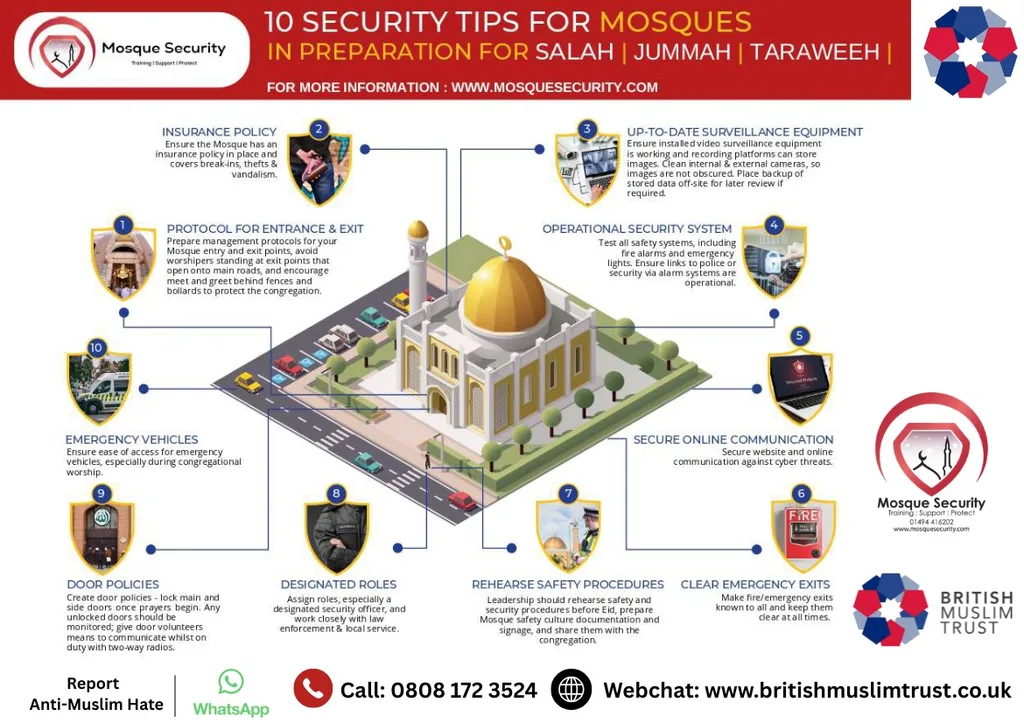
Mosques across the UK continue to welcome large congregations for Salah, Jummah, and Taraweeh, making safety and security a shared responsibility for every community. This publication, developed by Mosque Security in partnership with the British Muslim Trust, outlines 10 practical steps that help mosques create a safer, more resilient environment for worshippers.
These guidelines focus on proactive planning, strong communication, and coordinated action—ensuring that every mosque is prepared not only for daily prayers but also for high‑attendance occasions such as Ramadan and Eid.
Key Areas of Focus
- Entrance & Exit Protocols — Encouraging safe flow of worshippers, avoiding congestion at doors, and promoting meet‑and‑greet areas behind protective barriers.
- Insurance Coverage — Ensuring mosques are protected against break‑ins, vandalism, and other risks.
- Surveillance Readiness — Keeping CCTV systems clean, functional, and backed up securely off‑site.
- Operational Safety Systems — Regular testing of fire alarms, emergency lighting, and police‑linked alarms.
- Cyber‑Secure Communication — Protecting websites and digital channels from cyber threats.
- Clear Emergency Exits — Ensuring exits remain unobstructed and well‑communicated to all attendees.
- Rehearsed Safety Procedures — Preparing leadership teams with documented safety plans and visible signage.
- Designated Security Roles — Appointing a security officer and maintaining strong links with local authorities.
- Door Management Policies — Locking doors once prayers begin and equipping volunteers with communication tools.
- Emergency Vehicle Access — Keeping routes clear for emergency services during busy prayer times.
Supporting the Community
The publication also highlights the importance of reporting anti‑Muslim hate incidents. The British Muslim Trust provides support through WhatsApp, phone, and webchat, ensuring communities have a direct line to assistance when needed.
This resource empowers mosque committees, volunteers, and worshippers to work together in building a culture of safety—one that protects the sanctity of worship and strengthens community resilience.